Trijna Labs is building Bharat's homegrown, holonomy-inspired foundation model a Fourier-domain state-space architecture designed for linear-time scaling, native byte processing, and efficient sparse-weight inference for sovereign AI.
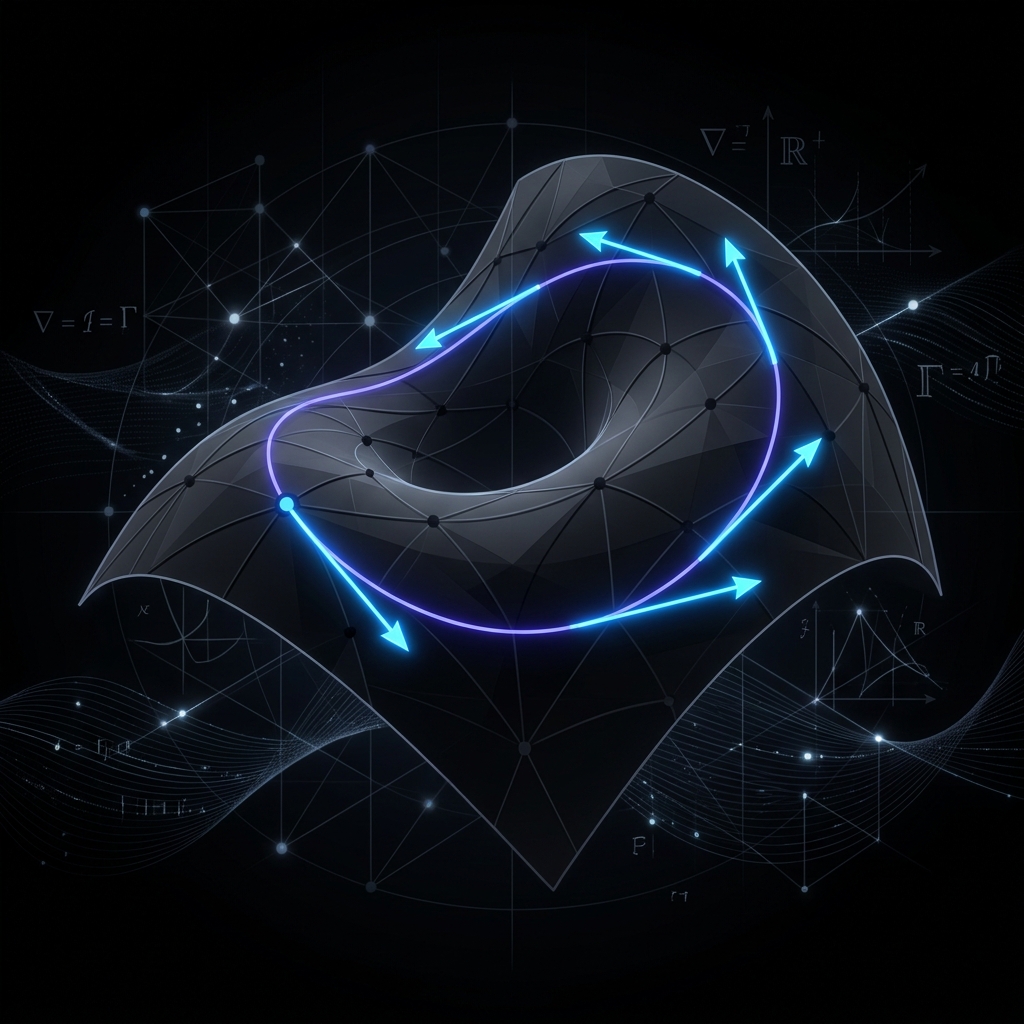
In differential geometry, holonomy describes how a vector changes when transported along a path to the final state depends on the route taken.
We have borrowed this intuition. Our core state vector S evolves via a linear recurrence in the frequency domain. Because the state accumulates the entire input history, the resulting representation is coherently path-dependent conceptually similar to parallel transport in curved space.
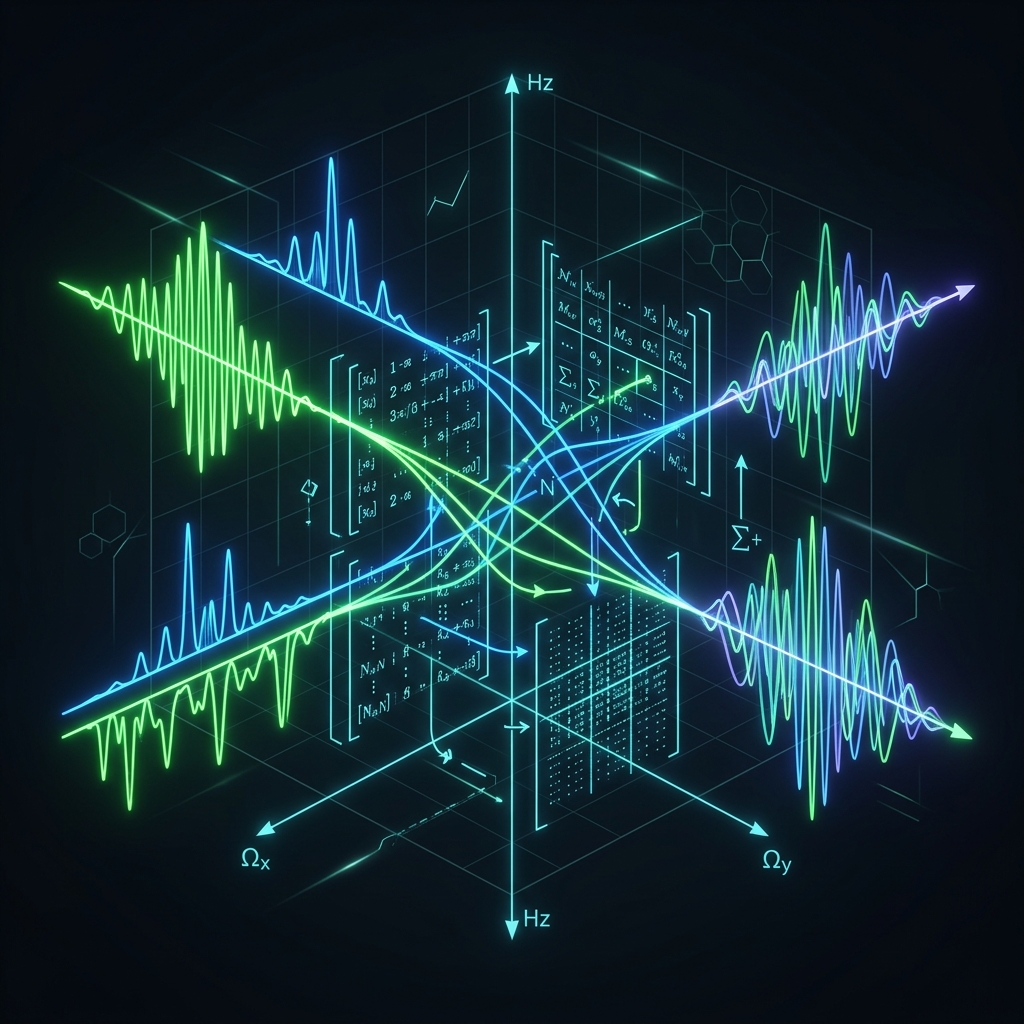
We do not compute a connection 1-form or curvature 2-tensor. We use complex linear projections in Fourier space to mix frequency bands together structurally analogous to a gauge transformation, not a literal geometric one. We use the term "holonomy-inspired" to convey the intuition behind the design, not to claim an implementation of physical field theory.
The architecture ingests raw UTF-8 byte sequences directly, without a tokenizer step, tried in one of our model which preserves the full nuance of Indic scripts and other languages without artificial subword splitting into a hard-coded architectural reality and not a roadmap item.
Transformers scale quadratically with context length via self-attention. Our recurrence is designed for linear-time scaling with context length.
The architecture uses ternary (2-bit) weights for low-power inference, aimed at efficient deployment on domestic infrastructure. Implemented and validated in hardware trials, with ongoing cache-level optimization.
What we've built is a frequency-domain, linear state-space recurrence with path-dependent memory. We welcome technical scrutiny of the underlying linear algebra and complexity claims.
We are building a foundation model architecture that is:
Sovereign AI
Engineered in Bharat, for Bharat's linguistic and computational needs and designed to run on accessible hardware rather than large server farms.
Curved manifold, vector transported along a loop. The final vector depends on the route the mathematical intuition behind our state recurrence.
Frequency-domain diagram showing bands mixing via complex projections. This is what the implementation actually computes FFT, gauge weights, IFFT.
Side-by-side: Transformer's sliding window versus Trijna's accumulating state vector St growing with context, enabling longer-horizon reasoning.
Dive deeper into the Trijna stack — from our core technology to the product ecosystem it powers.